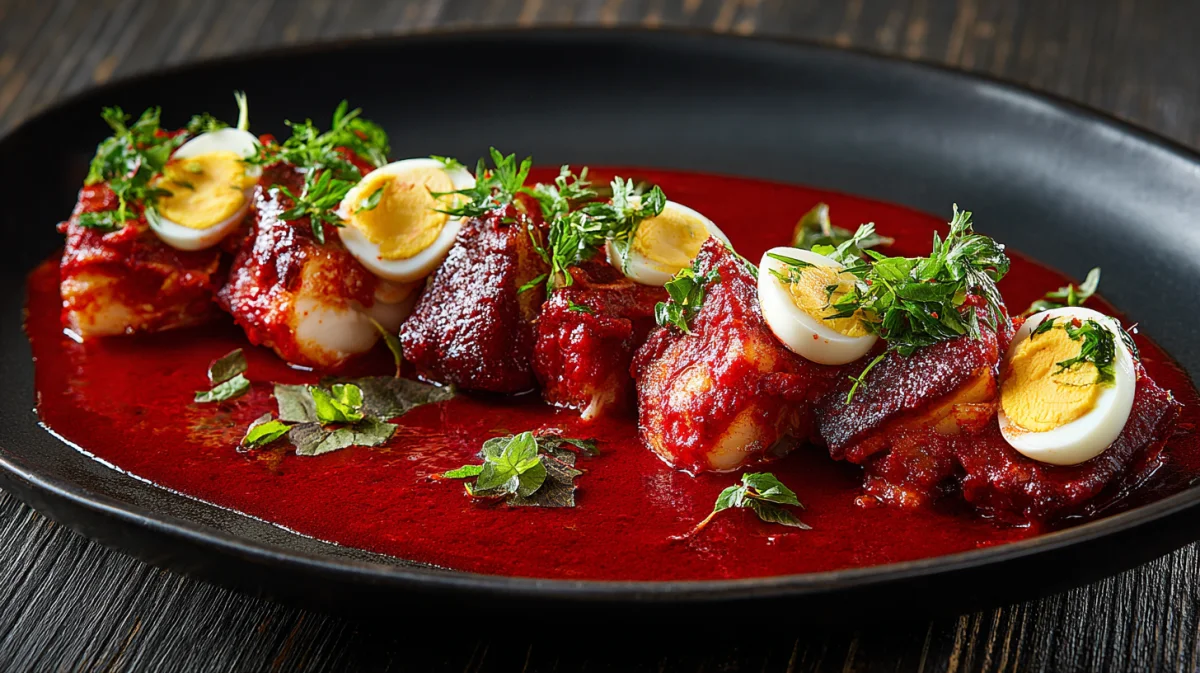
Bacalao a la Vizcaína

Food

Bacalao a la Vizcaína

Biscayan mastery - where dried peppers transform into liquid silk

Prep 45 min
Cook 30 min
Servings 6
Equipment large_skillet, food_processor, fine_mesh_strainer
In the fog-shrouded ports of Bizkaia, where the Bay of Biscay crashes against ancient stone quays and fishing boats bob like prayers on restless waters, one dish captures the very essence of Basque culinary philosophy: bacalao a la Vizcaína. This is not merely salt cod braised in sauce—it is an alchemy of dried peppers, slowly transformed through patient technique into something approaching liquid velvet. The dish tells the story of Basque maritime heritage in every spoonful. Salt cod—bacalao—sustained Basque sailors on their legendary voyages to Newfoundland, while the choricero peppers grew in the hills above the ports, their thick flesh perfect for drying in the Atlantic winds. What emerged from this marriage of necessity was a sauce of such complexity and depth that it rivals the greatest French mother sauces, yet remains uniquely, proudly Basque. The magic lies in the choricero peppers—broad, mild peppers that when dried and reconstituted create a sauce of extraordinary richness without heat. These are not the fiery chilies of other cuisines, but rather peppers chosen for their ability to provide color, sweetness, and a deep, almost smoky complexity. The traditional technique requires soaking the dried peppers until soft, then scraping the flesh from the skins to create a smooth purée that forms the heart of the sauce. This is cooking as meditation, as connection to generations of Basque cooks who understood that true luxury comes not from expensive ingredients but from perfect technique applied to humble materials. The slow building of the sofrito—onions cooked until they surrender their sharpness, tomatoes reduced to sweet essence—creates layers of flavor that support rather than compete with the star ingredients. What sets Vizcaína apart from other cod preparations is its restraint combined with intensity. The sauce should taste clearly of peppers, yet not overwhelm the delicate fish. It should be rich enough to coat each flake of cod, yet light enough that you crave another bite. In the best versions, every element sings in harmony—the sweet peppers, the tender cod, the aromatic sofrito—creating a dish that satisfies body and soul alike.

Scale Recipe

1 10 20

"I have 500g of lamb — scale everything else"

Instructions

0/12 complete

Prepare the dried peppers

Remove stems and seeds from the choricero peppers, then tear them into pieces. Place in a bowl and cover with warm water. Let soak for 30 minutes until completely soft and pliable.

The peppers should feel like soft leather when properly soaked. Save the soaking liquid.

Extract the pepper flesh

Using a spoon, scrape the soft flesh from the inside of each pepper skin, discarding the tough outer skins. You should have about 3/4 cup of deep red pepper paste. Strain the soaking liquid and reserve.

This step requires patience but is crucial for the smooth texture of the sauce.

Create the sofrito base

In a large, heavy-bottomed skillet, heat the olive oil over medium-low heat. Add the sliced onions and bay leaf, cooking slowly for 15-20 minutes, stirring occasionally, until golden and completely soft.

The onions should be caramelized and sweet, not browned or bitter.

Add garlic and tomato

Add the minced garlic to the onions and cook for 1 minute until fragrant. Add the grated tomato and cook for 8-10 minutes, stirring frequently, until the tomato has reduced and darkened.

The tomato should lose its raw acidity and become sweet and concentrated.

Incorporate the pepper paste

Add the scraped pepper flesh to the sofrito and cook for 5 minutes, stirring constantly. The mixture should be deep red and very aromatic. Add a pinch of sugar to balance the acidity.

The pepper paste needs cooking to develop its full flavor and eliminate any bitter notes.

Create the sauce

Gradually add 1-2 cups of the reserved pepper soaking liquid, stirring constantly, until you achieve a sauce consistency that coats the back of a spoon. Simmer gently for 10 minutes to meld the flavors.

The sauce should be smooth and glossy, thick enough to coat the cod without being heavy.

Strain for perfection

For the smoothest texture, pass the sauce through a fine-mesh sieve, pressing the solids to extract maximum flavor. Return the strained sauce to the pan and keep warm.

This step is optional but creates the silky texture prized in the finest restaurants.

Prepare the cod

Pat the desalted cod pieces completely dry and check for any remaining bones. Heat 2 tablespoons of olive oil in another pan over medium heat and briefly sear the cod pieces, about 2 minutes per side, just to warm through.

The cod is already "cooked" by the salt-curing process, so it just needs warming and light browning.

Marry cod and sauce

Gently nestle the seared cod pieces into the warm pepper sauce. Simmer very gently for 3-4 minutes, spooning sauce over the fish. The cod should be heated through but not overcooked.

Be gentle—the cod should remain in large, attractive pieces, not break apart.

Final seasoning

Taste the sauce and adjust seasoning with salt if needed (remember the cod is already salty). The sauce should be perfectly balanced—sweet from peppers and onions, savory from the sofrito, with just enough salt.

The pepper sauce should complement, not mask, the delicate flavor of the cod.

Traditional presentation

Arrange the cod pieces on a warm serving platter and spoon the beautiful red sauce over and around them. The sauce should pool around the fish attractively.

The visual impact should be striking—golden cod against deep red sauce.

Classic garnish

Traditionally garnish with slices of hard-boiled egg and fresh parsley. The white eggs provide color contrast and richness that complements the dish beautifully.

The egg garnish is not merely decorative—it adds textural contrast and additional protein.