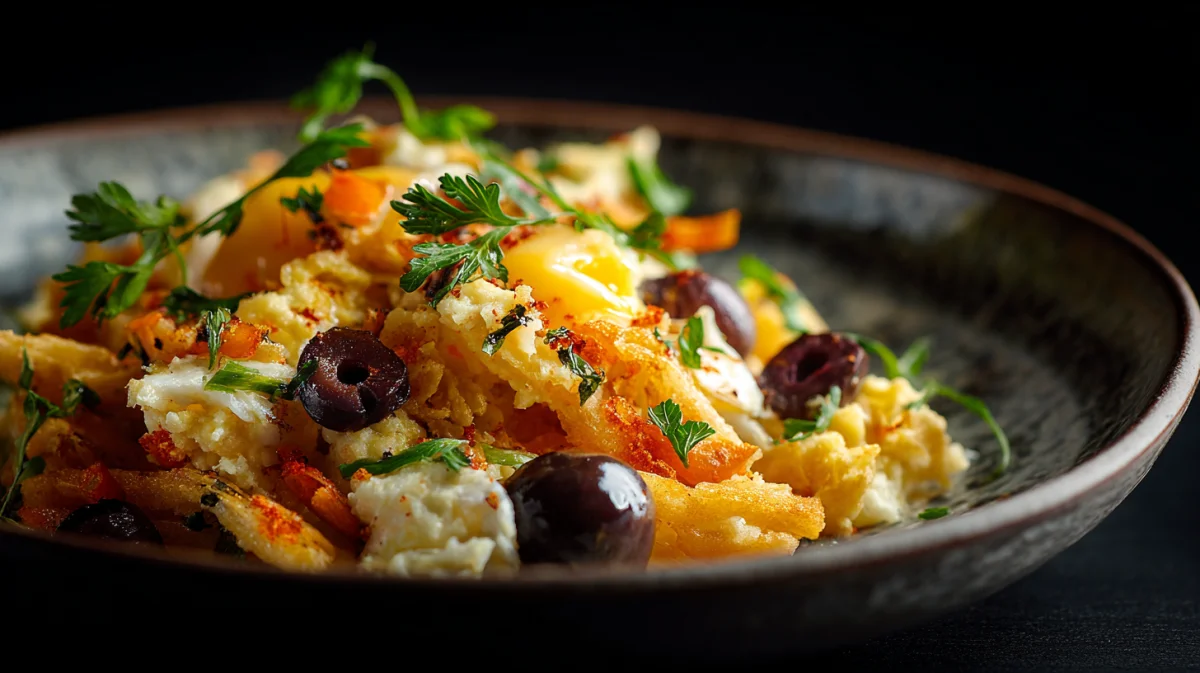
Bacalhau à Brás

Food

Bacalhau à Brás

Lisbon's golden trilogy - where cod, eggs, and potatoes find perfect harmony

Prep 30 min
Cook 25 min
Servings 6
Equipment large_skillet, deep_fryer_or_large_pot, mandoline
In the narrow, tiled streets of Lisbon's Bairro Alto, where laundry flutters between ancient buildings and the aroma of grilled sardines mingles with salt air, one dish reigns supreme as the ultimate expression of Portuguese comfort: bacalhau à Brás. Named after its inventor, a 19th-century tavern owner in the Bairro do Rato, this golden scramble of shredded cod, matchstick potatoes, and softly scrambled eggs represents the Portuguese soul on a plate. This is the dish that transforms Portugal's national obsession—bacalhau, or salt cod—into something approaching poetry. Where other Portuguese cod preparations can be hearty or rustic, bacalhau à Brás achieves an almost luxurious elegance through its textures: silky scrambled eggs, crispy potato straws, and tender flakes of cod, all bound together with good olive oil and the gentle sweetness of slowly cooked onions. The technique is deceptively simple but requires careful orchestration. The potatoes must be cut into perfect matchsticks—palha, or "straw," as they're known—and fried until golden and crispy. The cod must be properly desalted and flaked into generous pieces. The eggs must be scrambled slowly and stopped just short of full setting, so they remain creamy and bind the other ingredients without becoming rubbery. What makes this dish distinctly Portuguese is its restraint combined with richness. Unlike French scrambled eggs that might rely on butter and cream, bacalhau à Brás achieves its luxurious mouthfeel through technique alone—the gentle cooking of onions releases their natural sugars, the cod contributes saltiness and depth, and the eggs provide richness while the potatoes add textural contrast. The dish represents the Portuguese genius for elevating simple ingredients through careful technique. It's simultaneously humble and elegant, comforting yet sophisticated—a perfect metaphor for Portuguese cuisine itself. In Lisbon's tasquinhas and family kitchens alike, bacalhau à Brás remains the gold standard by which cooks are judged.

Scale Recipe

1 10 20

"I have 500g of lamb — scale everything else"

Instructions

0/12 complete

Final cod preparation

Remove the desalted cod from its soaking water and pat completely dry. Remove any remaining skin and bones, then flake the cod into generous, bite-sized pieces. Set aside in a bowl.

The cod should taste pleasantly salty but not aggressively so. If too salty, soak for another few hours.

Prepare the matchstick potatoes

Peel the potatoes and cut into thin matchsticks, about 3mm thick and 5cm long. The most efficient method is using a mandoline, but careful knife work achieves the same result. Rinse in cold water and pat dry thoroughly.

Uniform cutting ensures even frying. Dry potatoes prevent dangerous oil spattering.

Fry the potato straws

Heat vegetable oil to 170°C (340°F) in a deep pot or fryer. Fry the potato matchsticks in small batches until golden and crispy, about 3-4 minutes per batch. Remove with a slotted spoon and drain on paper towels. Season lightly with salt.

Don't overcrowd the oil—this lowers temperature and results in soggy potatoes.

Cook the onion base

In a large, heavy-bottomed skillet, heat the olive oil over medium-low heat. Add the sliced onions and cook slowly, stirring occasionally, until golden and caramelized, about 15-20 minutes.

Patience here is essential—slow-cooked onions provide the dish's sweet foundation.

Add garlic and cod

Add the minced garlic to the onions and cook for 1 minute until fragrant. Add the flaked cod and gently stir to coat with the oil and onions. Cook for 2-3 minutes to warm through.

The cod is already cooked from the salt-curing process, so it just needs warming.

Prepare the eggs

In a bowl, lightly beat the eggs with a few grinds of black pepper. Don't add salt—the cod provides sufficient salinity. The eggs should be just mixed, not fully beaten to a foam.

Under-beaten eggs create a better texture in the finished dish.

Add the potatoes

Gently fold the crispy potato straws into the cod and onion mixture, reserving about a quarter for final garnish. The potatoes should be well distributed but remain mostly intact.

Handle gently to maintain the potatoes' crispy texture.

The critical scramble

Reduce heat to low and pour the beaten eggs over the cod and potato mixture. Using a wooden spoon or spatula, gently stir and fold continuously, allowing the eggs to cook slowly and form soft, creamy curds.

This is the crucial moment—too fast and the eggs become rubbery; too slow and they won't set properly.

Perfect the texture

Continue the gentle stirring motion for 3-4 minutes until the eggs are just set but still creamy. The mixture should be golden, moist, and cohesive. Remove from heat while still slightly underdone—the residual heat will finish cooking.

The eggs should bind everything together without being dry or overcooked.

Final assembly

Taste and adjust seasoning with black pepper (salt is rarely needed due to the cod). Gently fold in most of the chopped parsley, reserving some for garnish.

The parsley adds color and freshness to balance the rich, golden dish.

Plating and garnish

Transfer to a warmed serving platter or individual plates. Top with the reserved crispy potatoes, remaining parsley, and black olives. Serve immediately while the eggs are still creamy.

The contrast between the warm, creamy base and crispy potato garnish is essential.

Traditional presentation

In Portugal, this is often served family-style from the cooking pan, placed in the center of the table with good bread for sopping up any precious remnants.

The communal serving style reflects the dish's role as comfort food for sharing.