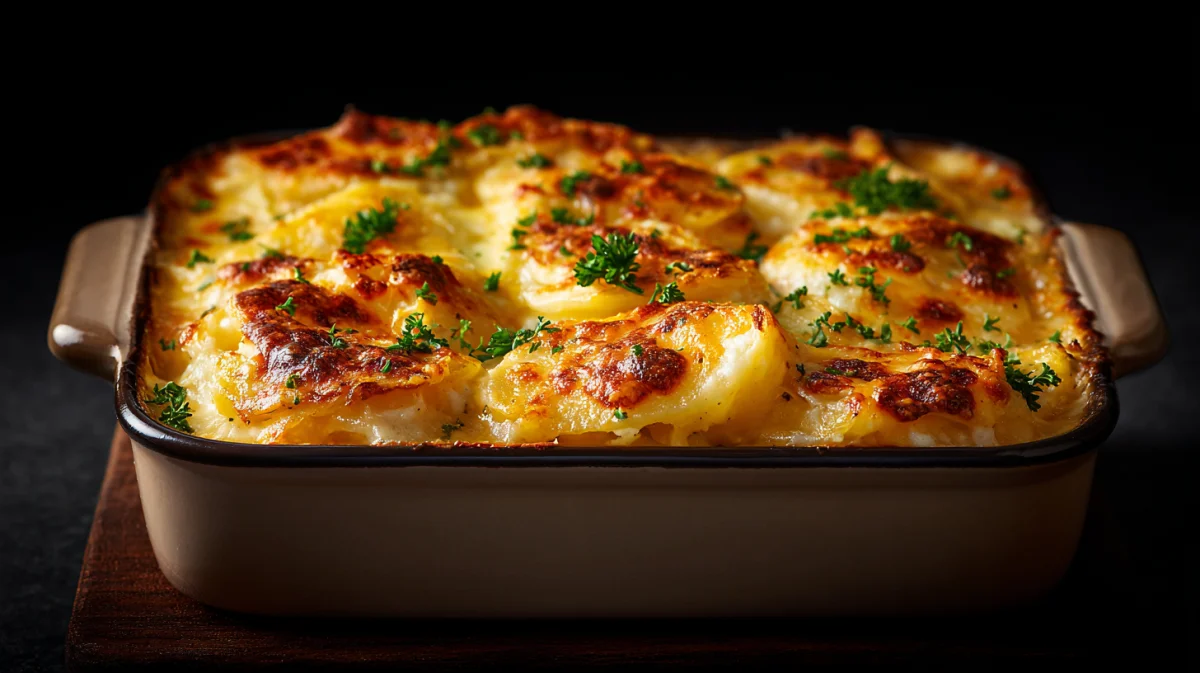
Bacalhau com Natas

Food

Bacalhau com Natas

Northern comfort - where Portuguese tradition meets French elegance

Prep 30 min
Cook 35 min
Servings 8
Equipment large_baking_dish, large_skillet, potato_ricer
In the granite-walled farmhouses of northern Portugal, where Atlantic mists roll through terraced vineyards and ancient traditions blend seamlessly with subtle French influences, one dish embodies the region's unique culinary character: bacalhau com natas. This is Portuguese comfort food elevated to art—layers of tender cod, creamy potatoes, and silky béchamel, baked until golden and bubbling, representing the perfect marriage of rustic tradition and elegant technique. The dish emerged in the Minho region during the 19th century, when Portuguese cooks began adapting French culinary techniques learned through cultural exchange and emigration. What they created was distinctly Portuguese—retaining the beloved bacalhau at its heart while embracing the French understanding of sauce-making and layered casserole construction. The result is sophisticated comfort food that satisfies both hunger and soul. The magic lies in the balance of textures: flaky cod that holds its shape yet yields tenderly to the fork, potatoes that provide substance without heaviness, and natas—the Portuguese cream—that binds everything together in luxurious harmony. This is not the heavy, flour-thickened sauces of some French gratins, but rather a lighter, more delicate treatment that allows each ingredient to shine while creating a cohesive whole. What sets bacalhau com natas apart from other cod casseroles is its restraint and elegance. The seasoning is subtle—bay leaves, a whisper of nutmeg, perhaps a hint of black pepper—allowing the natural flavors of cod and cream to dominate. The technique requires understanding: the potatoes must be properly cooked but not waterlogged, the cod must be perfectly desalted, and the cream sauce must achieve that perfect consistency between too thin and too thick. This is a dish that speaks to the Portuguese genius for transformation—taking preserved cod, humble potatoes, and simple cream, then through careful technique creating something that graces both family tables and restaurant menus. It represents the sophisticated side of Portuguese cuisine, where technique serves tradition and elegance emerges from simplicity.

Scale Recipe

1 10 20

"I have 500g of lamb — scale everything else"

Instructions

0/12 complete

Final cod preparation

Remove the desalted cod from soaking water, pat dry thoroughly, and check carefully for any remaining bones. Break into generous, bite-sized chunks—about 2 inches. The cod should taste pleasantly salty but not overpowering.

Proper desalting is crucial—taste a small piece to ensure the salt level is correct.

Cook the potatoes perfectly

Peel the potatoes and cut into 1cm thick slices. Boil in salted water with bay leaves for 12-15 minutes until just tender when pierced with a knife. They should hold their shape—not be mushy. Drain well and set aside.

Overcooked potatoes will break down in the final dish and create an unpleasant texture.

Create the aromatic base

In a large skillet, heat the olive oil over medium-low heat. Add the sliced onions and cook slowly, stirring occasionally, for 15-20 minutes until golden and completely soft but not browned.

Patient cooking of onions creates the sweet foundation that balances the saltiness of the cod.

Add garlic and cod

Add the minced garlic to the onions and cook for 1 minute until fragrant. Gently fold in the cod pieces, cooking for 3-4 minutes just to warm through and lightly firm up the fish.

The cod is already "cooked" by salt-curing, so it needs only gentle warming.

Prepare the cream sauce

In a heavy-bottomed saucepan, melt the butter over medium heat. Whisk in the flour and cook for 2 minutes, stirring constantly, to create a light roux—it should not brown.

This light roux will thicken the cream without adding color or heavy flour taste.

Build the béchamel

Gradually whisk in the milk, then the cream, ensuring no lumps form. Cook, stirring constantly, until the sauce thickens enough to coat the back of a spoon—about 5-8 minutes.

The sauce should be thick but pourable—it will thicken further during baking.

Season the sauce

Season the cream sauce with a pinch of nutmeg, white pepper, and salt to taste. Remember that the cod will contribute salinity, so season conservatively. The sauce should be rich but not overwhelming.

White pepper maintains the sauce's pale color while providing subtle heat.

Preheat and prepare

Preheat your oven to 200°C (400°F). Lightly butter a large baking dish (approximately 32cm x 25cm). The dish should be large enough to accommodate layers without overcrowding.

A properly sized dish ensures even cooking and attractive presentation.

Layer with precision

Create the first layer with half the potato slices, overlapping slightly. Add half the cod and onion mixture, spreading evenly. Repeat with remaining potatoes and cod mixture.

Even layering ensures every portion contains the proper balance of ingredients.

Add the cream sauce

Pour the warm cream sauce evenly over the layered ingredients, ensuring it reaches all corners. The sauce should just cover the top layer—add more hot milk if needed.

The sauce should penetrate the layers while providing a golden top when baked.

Final assembly

Sprinkle the grated cheese evenly over the surface. Drizzle lightly with olive oil, which will help create a beautiful golden top and add extra richness.

The cheese should cover evenly but not be so thick it masks the other flavors.

Bake to golden perfection

Bake for 25-30 minutes until the top is golden brown and bubbling around the edges. A knife inserted in the center should come out clean, and the surface should have attractive color variation.

The golden top and bubbling edges indicate proper cooking and appealing presentation.