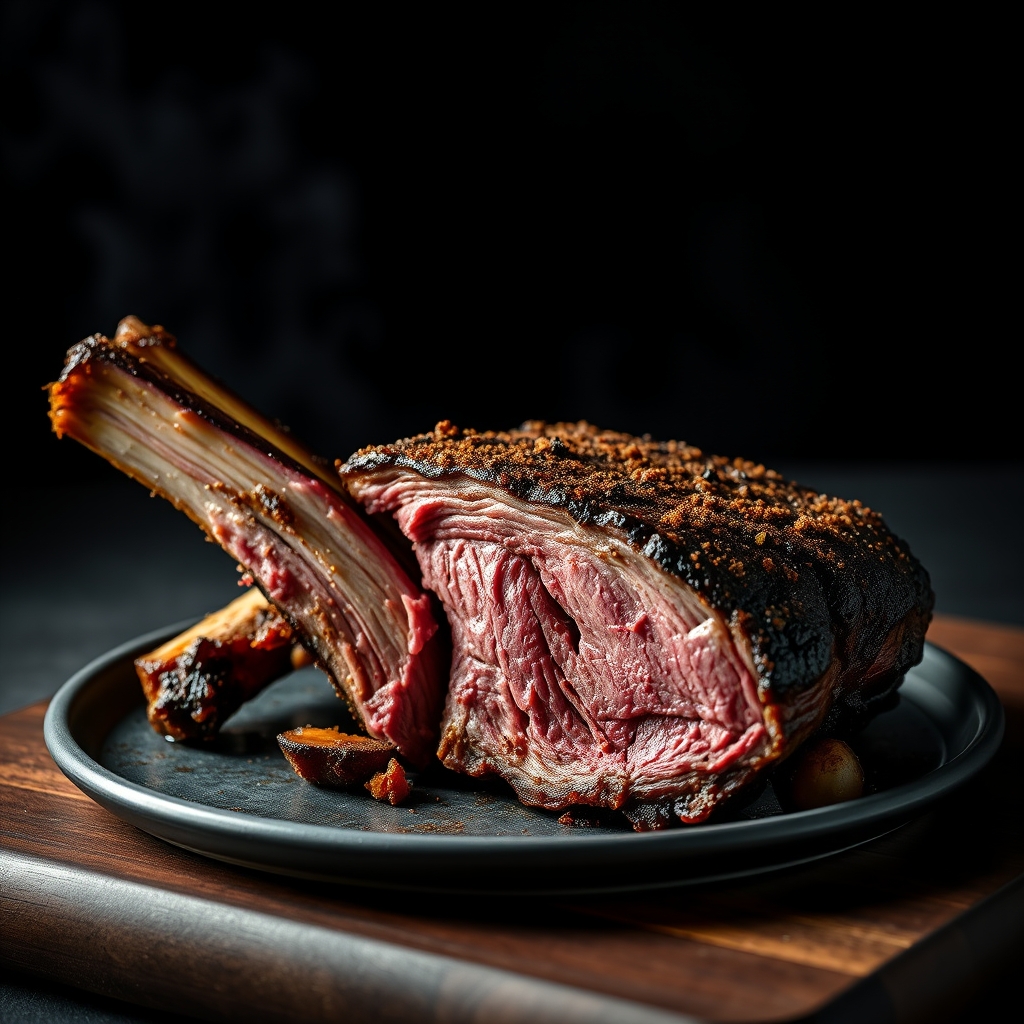
Big Green Egg Beef Short Ribs
Low and slow until fork-tender
The beef short rib is a study in transformation. Raw, it's a tough, connective-tissue-laden cut that would break your teeth if you tried to eat it undercooked. But subject it to six hours of smoke and low heat, and that same connective tissue converts to gelatin, the fat renders into basting liquid, and the meat becomes something approaching transcendence—pull-apart tender with a mahogany bark and a smoke ring that penetrates deep into the flesh.
The Big Green Egg, with its ceramic construction and precise temperature control, is ideally suited to this kind of cooking. Set it at 250°F and walk away, adding hickory chunks for smoke and trusting the kamado's thermal mass to maintain steady heat. The habanero hot sauce in the rub might raise eyebrows, but it's there for more than heat—the vinegar and capsaicin help break down the meat's surface and create a tackier bark that holds the seasoning in place.
The wrap at 198°F internal temperature isn't optional. Those final degrees, resting wrapped in butcher paper, allow the collagen to finish its transformation and the juices to redistribute. Cut into these ribs too soon and you'll lose half their potential to the cutting board.
Method
-
1
Prepare the rub
Combine all rub ingredients in a small bowl and mix thoroughly. This makes more than you need—store the remainder in an airtight container.
-
2
Season the ribs
Pat the ribs dry with paper towels. Coat all surfaces with the habanero hot sauce—this acts as a binder. Apply the rub liberally, pressing it into the meat. Let sit at room temperature for 15-30 minutes.
-
3
Set up the Big Green Egg
Configure for indirect cooking at 250°F (121°C). Add 3-4 hickory wood chunks to the charcoal. Allow the temperature to stabilize for 15-20 minutes.
-
4
Smoke the ribs
Place ribs bone-side down on the grate. Close the lid and smoke for 5 hours without opening, maintaining temperature at 250°F.
💡 Resist the urge to peek—you're losing heat and smoke every time you lift the lid.
-
5
Check temperature
After 5 hours, begin checking internal temperature with an instant-read thermometer. Continue cooking until the thickest part reaches 198°F (92°C).
-
6
Rest the ribs
Remove ribs from the Egg. Wrap tightly in butcher paper or aluminum foil. Rest for at least 1 hour—this allows juices to redistribute and collagen to set.
-
7
Serve
Unwrap carefully (save any collected juices to drizzle over). Slice between bones or serve as individual ribs.
Notes & Tips
Temperature control
- • The Big Green Egg's vents are your temperature dial. Bottom vent controls airflow in, top vent controls airflow out. Small adjustments have big effects—move in quarter-inch increments.
The stall
- • Around 150-170°F internal, the meat may "stall" as moisture evaporates and cools the surface. This can last hours. Don't panic—the temperature will eventually climb. Some pitmasters wrap at this point (the "Texas crutch") to push through faster.
Wood choice
- • Hickory provides classic barbecue flavor. For milder smoke, try oak or cherry. Apple wood adds subtle sweetness. Avoid mesquite for long cooks—it can become acrid.
Resting container
- • A small cooler lined with towels keeps the ribs hot for up to 4 hours if you need to hold them. This also continues the tenderizing process.
Leftover ideas
- • Shred and use for tacos with pickled onions
- • Slice thin for sandwiches with horseradish cream
- • Dice into a hearty beef and bean chili
Storage
- • Wrapped ribs keep refrigerated for 4 days. Reheat gently in a 275°F oven, wrapped, until warmed through.