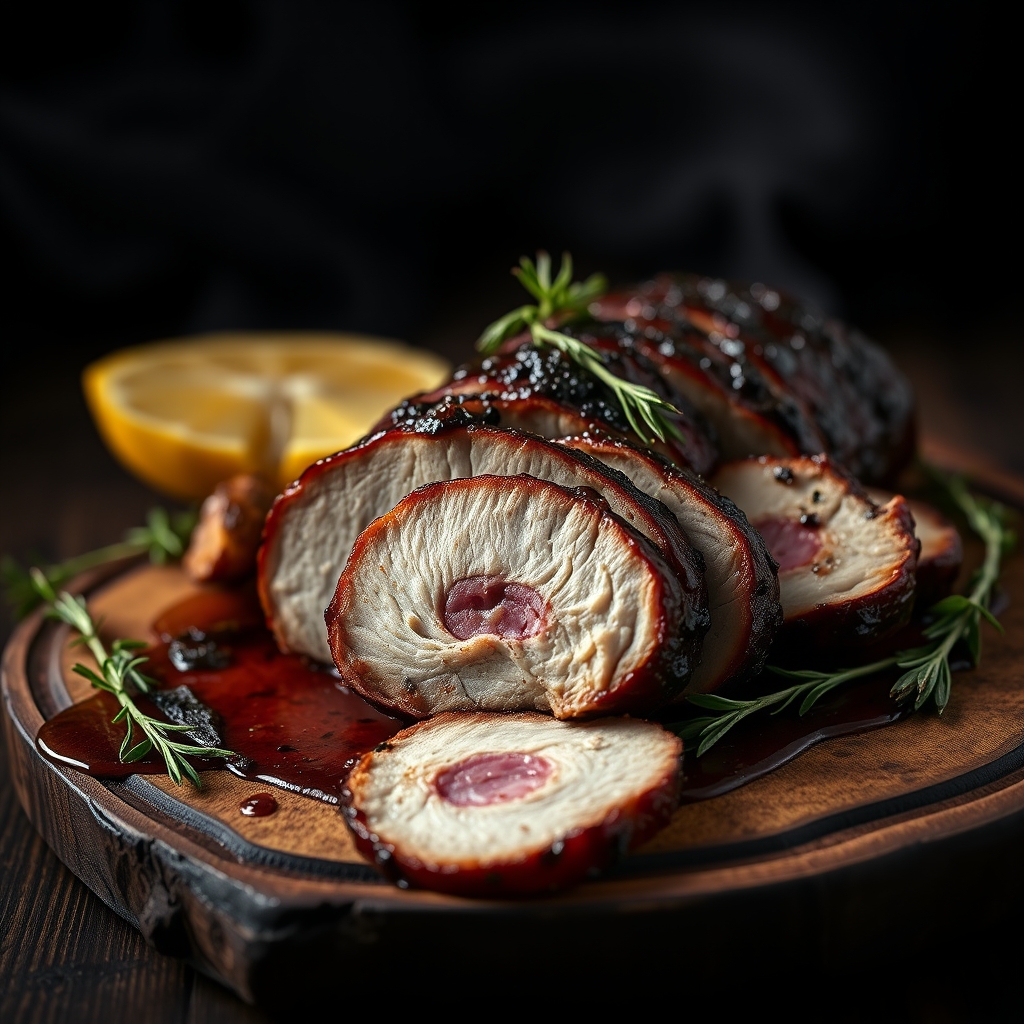
Maple-Brined, Maple-Glazed, Maple-Smoked Pork Loin
Food

Maple-Brined, Maple-Glazed, Maple-Smoked Pork Loin

Triple maple, zero subtlety, all delicious

8 servings
30 min prep
2 hr 30 min cook
3 hr total
Equipment: Big Green Egg

There's a certain honesty in a recipe that commits fully to a single flavor. This pork loin doesn't hedge its bets—it's maple in the brine, maple in the glaze, and maple wood providing the smoke. The result is not, as you might fear, cloyingly sweet. Instead, the maple serves as a unifying thread, its earthy sweetness balancing the natural savoriness of the pork and the slight bitterness of the smoke.

Brining is the often-skipped step that separates good pork from great pork. Pork loin, being a lean cut, tends toward dryness when cooked. The brine—a solution of salt, sugar, and aromatics—penetrates the meat over twenty-four hours, seasoning it throughout and fundamentally changing its protein structure to retain more moisture during cooking. The molasses and maple syrup in this brine add complexity and help form that lacquered, mahogany exterior that makes smoked pork so visually compelling.

The injection step might seem excessive given the brine, but it serves a different purpose: the apple juice and maple syrup injected directly into the meat create pockets of flavor that the surface-based brine can't reach. Think of it as flavor insurance—every slice, regardless of where you cut, will deliver.

Method

  1. 1

    Make the brine

    Combine all brine ingredients in a large pot. Bring to a boil, stirring until salt and sugar dissolve. Remove from heat and cool completely. Refrigerate until cold.

  2. 2

    Brine the pork

    Submerge the pork loin in the cold brine. Weight it down if necessary to keep it submerged. Refrigerate for 24 hours.

  3. 3

    Prepare for smoking

    Remove pork from brine and rinse under cold water. Pat completely dry. Place in cold water for 30 minutes to remove excess surface salt. Pat dry again.

  4. 4

    Set up the Big Green Egg

    Configure for indirect cooking at 225°F (107°C). Add maple wood chips to the charcoal and wait for clean smoke—thin and blue, not white and billowy.

  5. 5

    Inject the pork

    Mix injection ingredients. Using a meat injector, inject the pork at 2-inch intervals throughout, pushing the plunger slowly as you withdraw. Apply BBQ rub all over the surface.

  6. 6

    Smoke to temperature

    Place pork on the grate and smoke until internal temperature reaches 130°F (54°C), approximately 1.5-2 hours depending on thickness.

  7. 7

    Glaze and finish

    Begin brushing with maple syrup every 30 minutes. Continue until internal temperature reaches 150°F (65°C). Remove and rest for 10 minutes.

  8. 8

    Slice and serve

    Slice into 1cm medallions and serve with any remaining glaze and pan juices drizzled over.

Notes & Tips

Brine timing

  • 24 hours is optimal. Less than 12 hours won't penetrate fully. More than 48 hours risks ham-like texture. Set a timer.

The cold water soak

  • This step is crucial—it removes excess surface salt that would otherwise create an overly salty exterior. Don't skip it.

Internal temperature

  • Modern food safety allows pork to be cooked to 145°F (63°C). We go to 150°F because the residual heat during resting will push it slightly higher, and the texture at this temperature is ideal.

Smoke wood

  • Maple is traditional here, but apple or cherry wood provide lovely alternatives. Avoid strong woods like hickory or mesquite—they'll overpower the maple flavor theme.

Glazing frequency

  • More glaze = more lacquer. If you want maximum shine, glaze every 15 minutes during the final hour. Just watch that it doesn't burn.

Resting position

  • Rest the pork fat-side up so juices drain back into the meat rather than onto the board.

Leftover ideas

  • Slice thin for Cuban sandwiches
  • Dice for maple-pork fried rice
  • Shred for tacos with a lime crema

Storage

  • Wrapped tightly, keeps 5 days refrigerated. Reheat gently at 275°F, covered, with a splash of apple juice.