Food
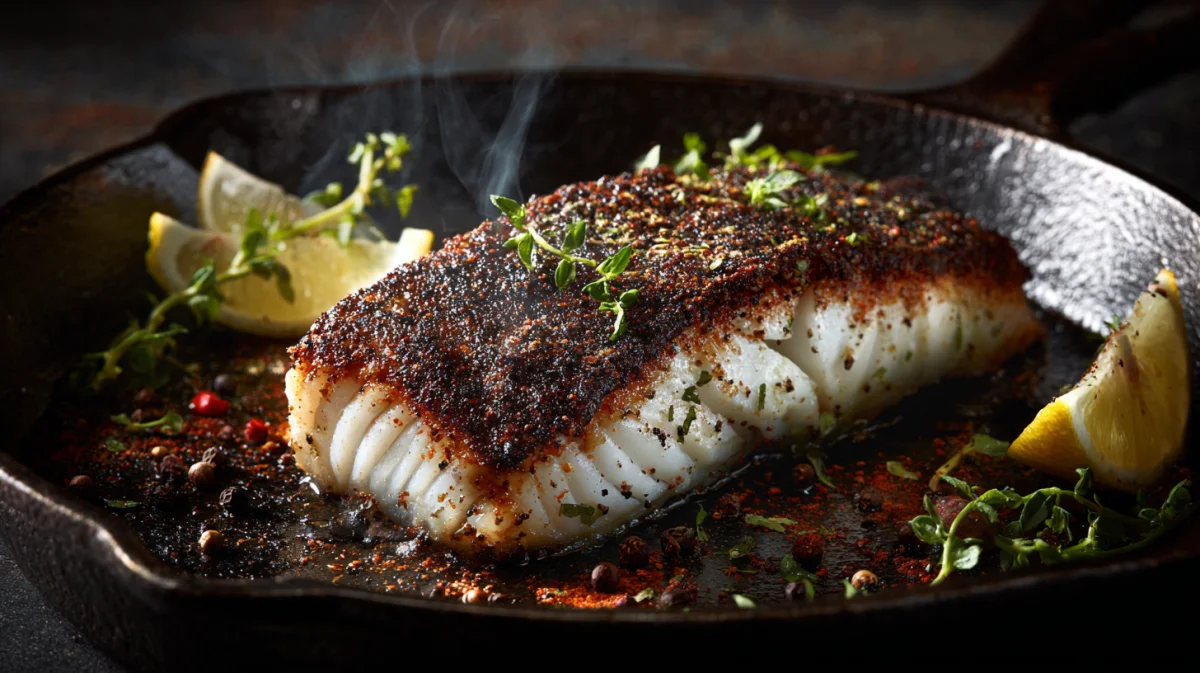
Blackened Sea Bass
New Orleans fire and spice - where cast iron meets Creole soul
Prep
15 min
Cook
8 min
Servings
4
Equipment
cast_iron_skillet, kitchen_exhaust_fan
In 1980s New Orleans, at K-Paul's Louisiana Kitchen on Chartres Street, chef Paul Prudhomme ignited a culinary revolution with a technique so dramatic, so deliciously aggressive, that it would define Creole cooking for generations. Blackening—the art of searing spice-crusted fish in a blazing cast-iron skillet until the seasonings form a dark, intensely flavorful crust—became the signature of New Orleans cuisine worldwide.
This is cooking as theater, as controlled violence, as pure sensory assault in the best possible way. The technique demands respect: a screaming-hot cast-iron pan, butter heated until it threatens to ignite, and spices that bloom and char simultaneously, creating layers of flavor impossible to achieve through gentler methods. When done correctly, the fish emerges with an almost black exterior that gives way to perfectly moist, flaky flesh beneath.
The spice blend itself tells the story of New Orleans—paprika from Spain via the Caribbean trade routes, cayenne from the local pepper tradition, herbs that grow in Louisiana's humid embrace, and the holy trinity of garlic, onion, and bell pepper in powdered form. Each spice serves a purpose: paprika for color and sweet pepper notes, cayenne for heat, thyme and oregano for earthiness, garlic and onion for depth.
What separates authentic blackening from mere pan-searing is the commitment to heat. The cast iron must be so hot it's nearly white-hot, hot enough that the butter foams and browns almost instantly. This intense heat creates the Maillard reaction at warp speed, developing complex flavors in seconds that would normally take minutes. It's a technique that rewards boldness and punishes timidity.
The dish represents everything that makes New Orleans cooking unique—the willingness to push ingredients to their limits, the celebration of bold flavors over subtle ones, and the understanding that sometimes the best cooking happens right at the edge of disaster. When you smell the spices blooming in that screaming pan, you're experiencing the very soul of Creole cuisine.
Scale Recipe
1
10
20
or
"I have 500g of lamb — scale everything else"
Instructions
0/12 complete