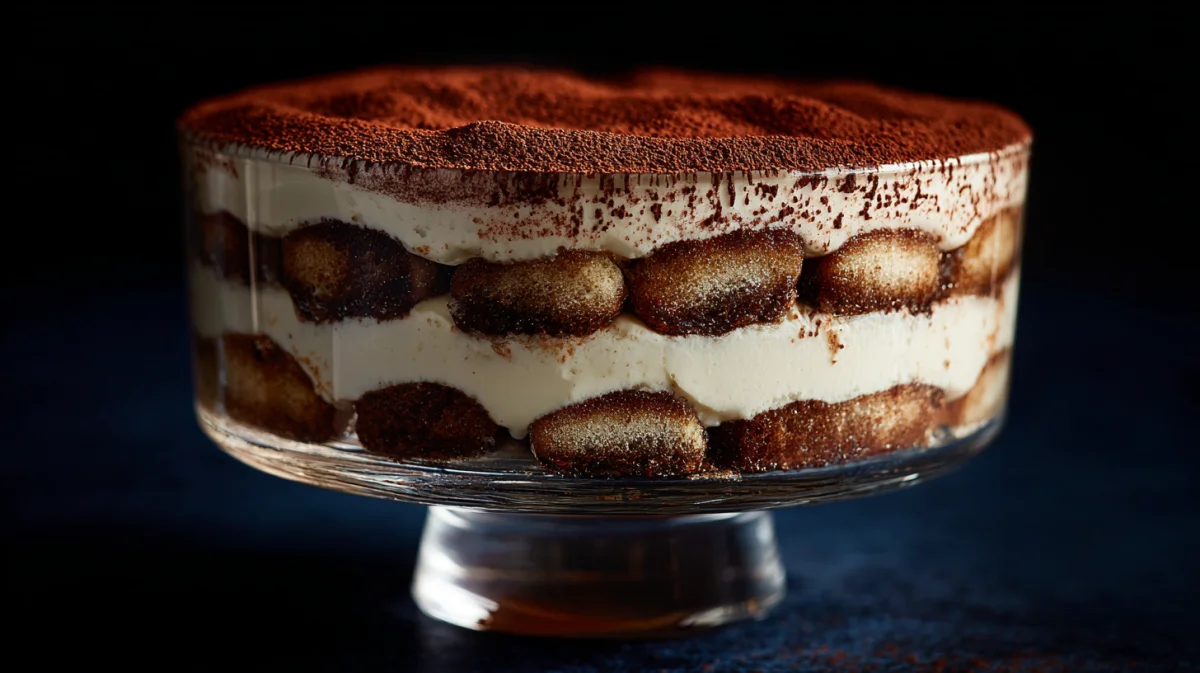
Classic Italian Tiramisu

Food

Classic Italian Tiramisu

The authentic coffee-kissed dessert that needs no introduction

Prep 30 min
Cook 0 min
Servings 8
Equipment stand_mixer, whisk
Tiramisu—literally meaning "pick me up" in Italian—is perhaps one of the most beloved desserts to emerge from the Veneto region. This is no mere dessert; it's edible poetry, where each layer tells a story of contrast and harmony. The bitter intensity of espresso meets the silk of mascarpone, while ladyfingers provide structure and the amaretto adds warmth and depth. What makes this recipe authentic is its restraint. No gelatin, no cream cheese substitutions, no shortcuts—just the six essential components that have made tiramisu a global phenomenon since its invention in the 1960s at Le Beccherie restaurant in Treviso. The beauty lies in the technique: creating a proper sabayon with the egg yolks and sugar, achieving perfectly stiff peaks with the egg whites, and understanding that mascarpone requires a gentle touch to avoid breaking. The coffee element deserves special attention. This recipe calls for strong espresso—not merely strong coffee, but proper espresso with its concentrated flavor and natural oils. The amaretto isn't just flavoring; it's the bridge that connects the coffee's bitterness to the cream's sweetness, creating that sophisticated adult flavor profile that separates restaurant tiramisu from home attempts. Time is the final, often overlooked ingredient. Three hours minimum chilling transforms separate layers into a cohesive whole, where flavors meld and the ladyfingers achieve that perfect texture—soft but not mushy, structured but not hard. This is dessert as architecture: each element essential, timing crucial, patience rewarded.

Scale Recipe

1 10 20

"I have 500g of lamb — scale everything else"

Instructions

0/12 complete

Prepare the coffee mixture

Pour the cold espresso into a medium bowl and stir in 4 tablespoons of the Amaretto liqueur. Set aside to cool completely. The coffee should be strong enough to taste distinctly through the cream—weak coffee creates bland tiramisu.

Use espresso rather than regular coffee for authentic intensity and proper absorption into the ladyfingers.

Prepare your serving dish

Have ready a 20 x 30cm ceramic dish or 8 individual tumblers, ensuring they're at least 7cm deep. The depth is crucial for proper layering and presentation.

Glass dishes showcase the beautiful layers, but ceramic works equally well.

Whip the egg whites to firm peaks

Place egg whites in a large, completely clean bowl. Using an electric whisk, beat until firm, glossy peaks form. Set aside—these provide the essential lightness to the cream layer.

Any trace of grease or egg yolk will prevent proper whipping. Clean your bowl with lemon juice if uncertain.

Create the sabayon base

In another large bowl, combine egg yolks and caster sugar. Beat vigorously for 5 minutes until the mixture becomes thick, pale, and ribbons form when the whisk is lifted. This sabayon technique is crucial for the proper texture and stability.

The mixture should increase significantly in volume and turn almost white—this creates the foundation for a stable mascarpone cream.

Incorporate the mascarpone

Add the room-temperature mascarpone to the egg yolk mixture and beat thoroughly until completely smooth. Work quickly but don't overbeat—mascarpone can separate if worked too aggressively.

Room temperature mascarpone incorporates more easily and creates a smoother final texture.

Add cream and remaining amaretto

Gently fold in the double cream along with the remaining Amaretto liqueur using a large metal spoon. Use cutting and folding motions to maintain the mixture's lightness.

The cream adds richness while the amaretto provides depth—both should be folded in gently to preserve texture.

Fold in the egg whites

Using the same gentle folding technique, incorporate the beaten egg whites into the mascarpone mixture in two additions. Work carefully to maintain volume and air—this creates tiramisu's characteristic light yet rich texture.

Rush this step and you'll lose the airiness that separates great tiramisu from dense, heavy versions.

Assemble the first layer

Working quickly, dip each ladyfinger into the coffee mixture for exactly 2 seconds—long enough to absorb flavor but not so long they become mushy. Arrange in a single layer covering the bottom of your dish or divide between individual glasses.

The sugar-coated side of the ladyfingers should face up for optimal texture and presentation.

Add the first cream layer

Spread half of the mascarpone mixture evenly over the coffee-soaked ladyfingers, using a palette knife to create a smooth, even layer.

Work gently to avoid disturbing the soaked biscuits beneath.

Create the second layer

Repeat the dipping process with the remaining ladyfingers, creating a second complete layer. Top with the remaining mascarpone mixture, smoothing the surface with a palette knife for an elegant presentation.

This double-layer technique creates the classic tiramisu architecture and ensures proper coffee distribution.

Chill to perfection

Cover tightly with cling film and refrigerate for minimum 3 hours, though overnight is preferable. This resting time allows flavors to meld and textures to achieve their perfect balance.

Patience here separates good tiramisu from exceptional tiramisu—the overnight rest creates magic.

Final presentation

Just before serving, remove the cling film and dust generously with unsweetened cocoa powder using a fine-mesh sieve. Dust at the last moment to prevent the cocoa from becoming bitter.

The cocoa provides visual contrast and a final note of bitterness that balances the sweet, rich layers beneath.