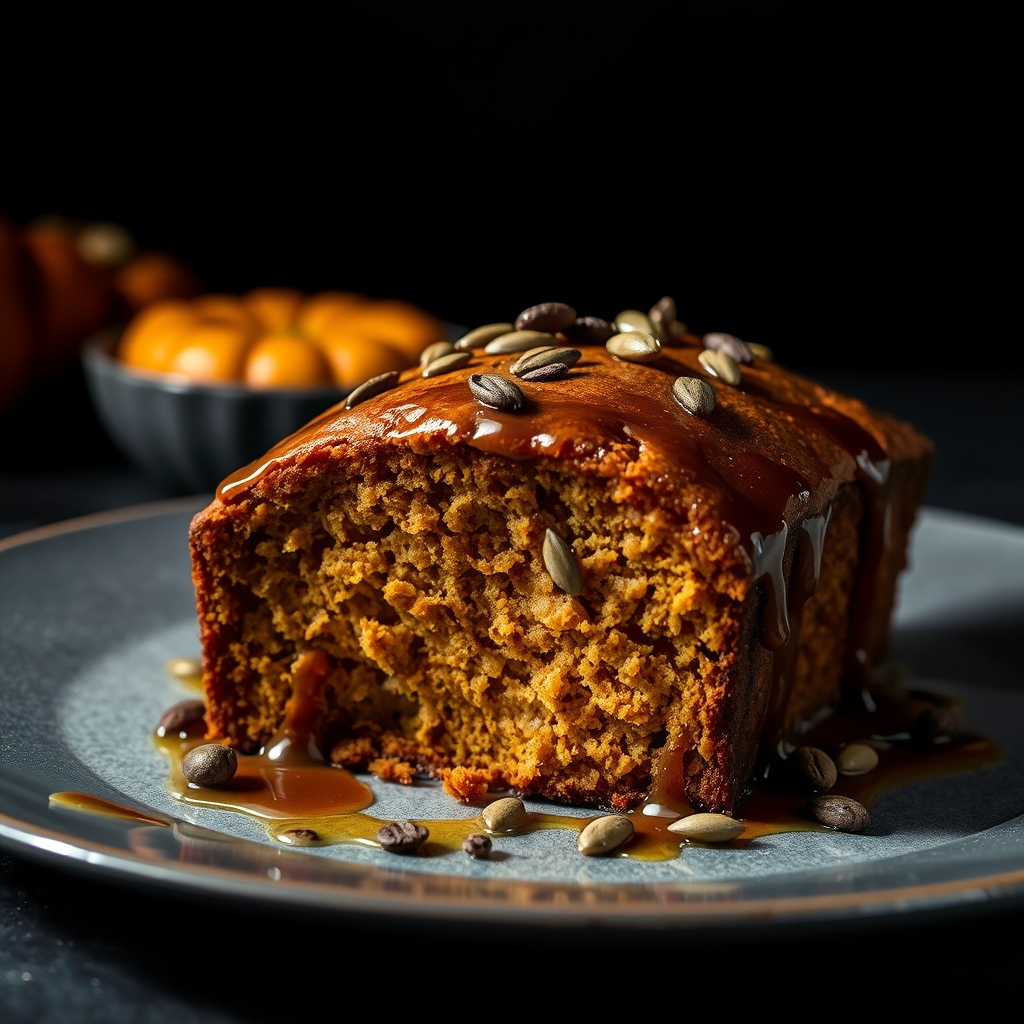
Kabocha Olive Oil Chocolate Cake
Japanese pumpkin meets Californian indulgence
The kabocha squash arrived in the Americas via Portuguese traders, who brought it from Japan to California, where it promptly became a farmer's market darling. Its flesh is denser and sweeter than regular pumpkin, with a chestnut-like nuttiness that makes it ideal for desserts. Nicole Rucker, pastry chef at Gjelina in Venice Beach, understood this instinctively and created what might be the most sophisticated pumpkin bread ever conceived.
This is not the dense, aggressively spiced quick bread of American Thanksgivings. It's lighter, moister, enriched with olive oil rather than butter, and studded with chunks of bittersweet chocolate that melt into pockets of molten richness. The spicing—cinnamon and nutmeg in quantities that suggest rather than shout—plays supporting role to the squash's natural sweetness. The olive oil glaze on top adds a final savory note that prevents the whole thing from becoming too dessert-like.
The technique requires roasting the kabocha first, which concentrates its sugars and deepens its flavor. This takes time, but the hands-on work is minimal. The reward is a cake that manages to be both healthier than its traditional cousins (olive oil, vegetables) and more indulgent (all that chocolate). It's the kind of cognitive dissonance that makes eating it feel like you're getting away with something.
Method
-
1
Roast the kabocha
Preheat oven to 220°C. Place squash cut-side down on a sheet pan, drizzle with olive oil. Roast until very soft and caramelizing at the edges, 30-45 minutes. Cool completely.
-
2
Make the puree
Scrape out the cooked squash flesh and transfer to a food processor. Pulse until completely smooth. Measure out 225g and let cool to room temperature.
💡 Extra puree keeps refrigerated for 5 days—excellent on toast.
-
3
Prepare the pan
Reduce oven to 165°C. Butter a 23x12cm loaf pan and line with parchment.
-
4
Mix dry ingredients
Sift flour, baking powder, baking soda, cinnamon, nutmeg, and salt into a large bowl.
-
5
Mix wet ingredients
In a separate bowl, whisk together sugar, olive oil, squash puree, and eggs until smooth.
-
6
Combine and add chocolate
Make a well in the dry ingredients. Pour in the wet mixture and whisk until just combined. Fold in the chopped chocolate.
-
7
Bake
Pour batter into prepared pan. Bake until browned on top and a skewer inserted in center comes out clean, 75-90 minutes. Cool in pan for 20 minutes, then invert onto a rack.
-
8
Toast the pepitas
While cake cools, toast pepitas in a dry pan over medium heat until fragrant and beginning to brown, 3-5 minutes. Set aside.
-
9
Make the glaze
Whisk confectioners' sugar with 2 tbsp hot water until thick and smooth. Slowly drizzle in olive oil while whisking constantly until consistency resembles honey.
-
10
Finish and serve
Transfer cake to serving plate. Pour glaze over top, letting it drip down the sides. Sprinkle with cacao nibs and toasted pepitas. Let glaze set for 1 hour before slicing.
Notes & Tips
Kabocha selection
- • Choose a kabocha that feels heavy for its size with dull, matte skin. Shiny skin indicates the squash was picked too early.
Butternut substitute
- • If kabocha is unavailable, butternut squash works but is slightly sweeter and wetter. Reduce sugar by 2 tablespoons.
Olive oil matters
- • Use a fruity, peppery olive oil for both cake and glaze. The olive flavor should be present but not aggressive.
Storage
- • The cake keeps, wrapped, at room temperature for 3 days. The glaze may soften slightly but the flavor improves with time.
Serving suggestion
- • A dollop of mascarpone or crème fraîche alongside each slice provides a cooling counterpoint to the spiced chocolate.