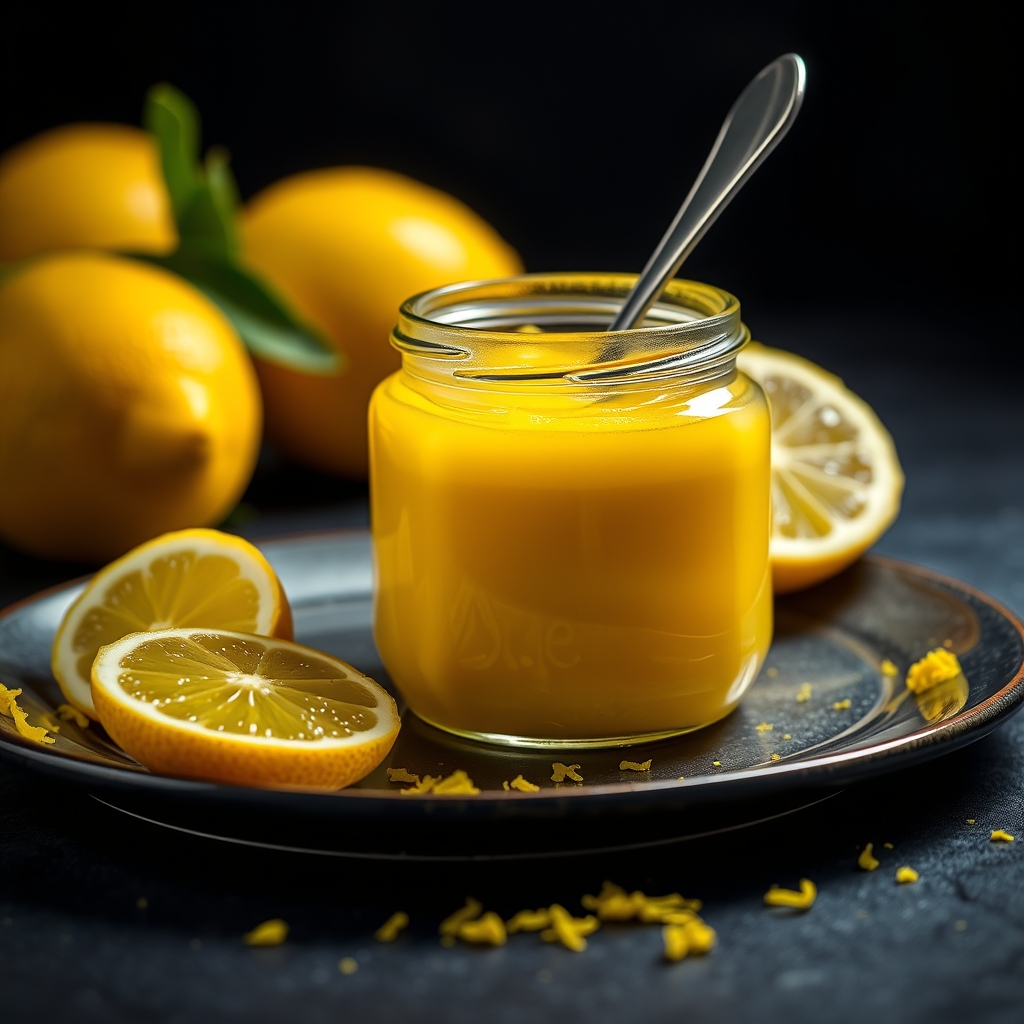
Classic Lemon Curd
Sunshine in a jar
The British have a talent for understatement, and calling this radiant preparation "curd" is a fine example. Lemon curd is not curdled in any meaningful sense—it's a smooth, glossy, intensely flavored cream that happens to involve eggs and citrus cooked together until they thicken into something approaching solid sunshine. The Scandinavians, who adopted the recipe with characteristic enthusiasm for all things citrus during the long dark winters, call it sitronkrem—lemon cream—which is both more accurate and less off-putting to the uninitiated.
The technique is a gentle dance with heat. Eggs and lemon juice, left to their own devices over direct flame, will scramble. A double boiler provides the insurance policy: the bowl never gets hotter than boiling water, which isn't hot enough to scramble eggs but is perfectly adequate to thicken them. The butter, added at the end, gives the curd its characteristic silkiness and a slight richness that prevents the lemon from becoming too aggressive.
What you do with the finished curd is limited only by imagination. It fills tarts and tops pavlovas. It spreads on scones and mingles with yogurt. It makes French toast transcendent and transforms a simple cake into something memorable. A jar in the refrigerator is a kind of insurance policy against bland desserts.
Method
-
1
Combine eggs and sugar
In a heat-proof bowl (stainless steel or glass), whisk together egg yolks and sugar until well combined and slightly pale.
-
2
Prepare the lemon
Wash the lemon thoroughly. Using a microplane or fine grater, zest only the yellow outer layer—the white pith is bitter. Cut the lemon in half and juice, straining out any seeds.
💡 Fresh, ripe lemons make an enormous difference.
-
3
Add the juice
Whisk the lemon juice into the egg mixture.
-
4
Set up double boiler
Fill a saucepan with 5cm of water and bring to a gentle simmer. Set your bowl over the pan—it should not touch the water.
-
5
Cook the curd
Stir constantly with a spatula or wooden spoon. After 10-15 minutes, the curd will thicken enough to coat the back of the spoon. A line drawn through it should hold.
💡 Patience is essential here—rushing leads to scrambled eggs.
-
6
Add butter and zest
Remove from heat. Whisk in cold butter, one cube at a time, until fully incorporated and glossy. Stir in the lemon zest.
-
7
Cool and store
Transfer to a clean jar or container. Press plastic wrap directly onto the surface to prevent a skin from forming. Refrigerate for at least 2 hours before using.
Notes & Tips
Storage
- • Properly stored, lemon curd keeps for 2 weeks refrigerated. Do not freeze—the texture suffers.
Whole egg version
- • Using 1 whole egg instead of 2 yolks produces a slightly lighter curd with less richness. Both are valid approaches.
Variations
- • Lime curd: substitute lime juice and zest
- • Blood orange curd: heavenly in winter
- • Passion fruit curd: half passion fruit pulp, half lemon juice
Uses
- • Fill tartlet shells and top with fresh berries
- • Swirl into Greek yogurt
- • Layer with whipped cream for an Eton mess variation
- • Spread on scones instead of jam
- • Top pancakes or waffles