Lubina a la Sal

Food

Lubina a la Sal

Andalusian alchemy - where salt becomes both prison and perfection

Prep 15 min
Cook 35 min
Servings 6
Equipment large_baking_tray, kitchen_mallet
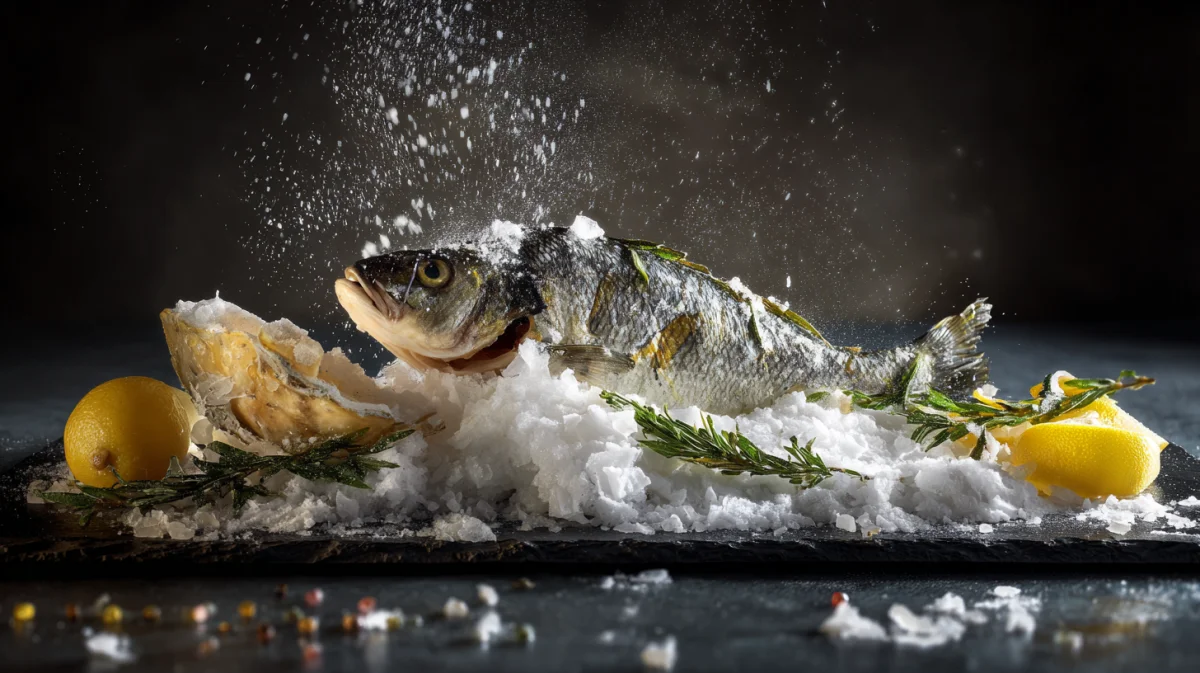
In the coastal restaurants of Andalusia, where the Mediterranean crashes against white-washed villages, one technique reigns supreme for showcasing the sea's bounty: salt-baking. Lubina a la sal—sea bass entombed in a fortress of coarse salt—represents one of cooking's most paradoxical arts. The very element that preserves fish for eternity becomes, in the right proportions and conditions, the gentlest possible cooking medium. The technique emerged from the salt flats of Cádiz, where the precious white crystals have been harvested since Phoenician times. What local cooks discovered was that salt, when mixed with just enough moisture and packed around whole fish, creates a sealed cooking environment more controlled than any oven. The salt crust conducts heat evenly while trapping every molecule of moisture, steam-cooking the fish in its own juices while imparting only the subtlest salinity. This is theater as much as cooking. The salt-encased fish arrives at the table like an ancient artifact, requiring ceremonial cracking to reveal the treasure within. When done correctly, the skin peels away with the salt crust, leaving flesh so moist and flaky it seems to have been cooked by the sea itself. The meat tastes purely of fish—not salt, not herbs, just the concentrated essence of sea bass elevated to its highest possible expression. The technique demands respect for ingredients above all else. The fish must be impeccably fresh, the salt coarse and pure, the timing precise. There are no hiding places in salt-baking—every flaw is magnified, every perfection preserved. It's a method that separates confident cooks from timid ones, rewarding boldness with results that seem almost magical. What makes this dish particularly Spanish is the restraint. While other cuisines might stuff the cavity with aromatics or baste with complicated sauces, the Andalusian approach trusts the ingredients to speak for themselves. A drizzle of first-press olive oil, a squeeze of lemon, perhaps a scatter of herbs—nothing more is needed when the fish is this perfectly cooked.

Scale Recipe

1 10 20

"I have 500g of lamb — scale everything else"

Instructions

0/12 complete

Prepare the oven and workspace

Preheat your oven to 200°C (400°F). Line a large baking tray with parchment paper. Ensure you have enough counter space to work comfortably—salt-baking requires room to maneuver.

Use a tray large enough to accommodate the fish with at least 5cm of space around all sides.

Prepare the fish

Pat the sea bass completely dry inside and out with paper towels. Check the cavity for any remaining scales or blood, rinsing briefly if necessary, then dry again thoroughly. Season the cavity lightly with black pepper.

Any residual moisture will create steam pockets in the salt crust, compromising the seal.

Stuff the cavity (optional)

If desired, place a few bay leaves, lemon slices, and thyme sprigs in the fish cavity. This is traditional but not essential—the fish is magnificent even without aromatics.

The aromatics add subtle fragrance but the technique works beautifully with an empty cavity as well.

Create the salt mixture

In a large bowl, combine the coarse salt with the egg whites. Mix with your hands until the salt feels like slightly damp sand and holds together when squeezed. The consistency should be moldable but not wet.

The egg whites provide just enough moisture to make the salt moldable while helping create a hard crust when baked.

Create the salt bed

Spread about one-third of the salt mixture on the prepared baking tray, creating a fish-shaped bed slightly larger than your sea bass. Press down gently to create a firm, even foundation.

The base layer should be about 1cm thick and completely even to ensure uniform heat distribution.

Position the fish

Lay the sea bass on top of the salt bed, positioning it centrally with equal space around all sides. The fish should sit comfortably without overhanging the salt base.

Once you begin covering with salt, the fish cannot be repositioned, so take time to get the placement right.

Encase in salt

Using your hands, pack the remaining salt mixture over and around the fish, completely encasing it. The salt layer should be about 1.5cm thick all around, with no gaps or thin spots.

Work systematically from head to tail, ensuring even coverage. The salt should form a complete shell around the fish.

Seal the crust

Press gently but firmly all over the salt crust to eliminate air pockets and create a solid shell. The surface should be smooth and uniform, resembling a fish-shaped salt sculpture.

A properly sealed crust is essential—any gaps will allow steam to escape, drying out the fish.

Bake to perfection

Place in the preheated oven and bake for 30-35 minutes (about 15-18 minutes per kilogram of fish). The salt crust should become golden and feel completely firm when tapped.

Resist the urge to check early—opening the oven releases heat and can crack the developing crust.

Test for doneness

The crust should sound hollow when tapped with a wooden spoon, and may have small cracks on the surface. The internal temperature should reach 60°C when measured through the thickest part of the salt.

If using a probe thermometer, insert it through the thickest part of the salt crust at the fish's center.

Rest before cracking

Remove from the oven and let rest for 5 minutes. This allows the juices to redistribute and the crust to set completely, making it easier to crack cleanly.

The resting period is crucial—crack too early and you may tear the delicate flesh.

The ceremonial cracking

Using a kitchen mallet or the back of a heavy knife, crack the salt crust around the fish's perimeter. Lift away large pieces of crust—the skin should come away with the salt, revealing perfectly cooked, pearlescent flesh beneath.

Work carefully around the head and tail areas where the crust may be thicker.